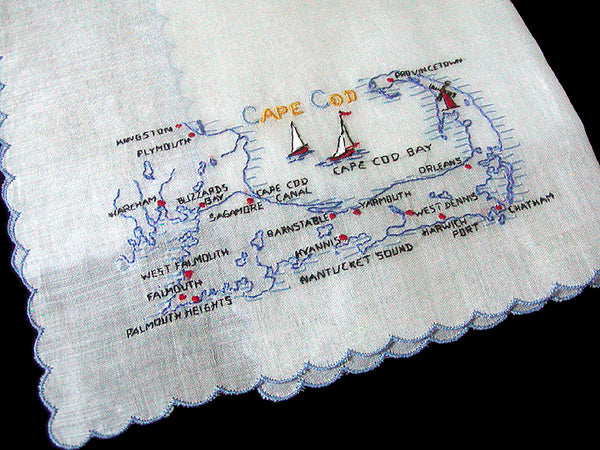
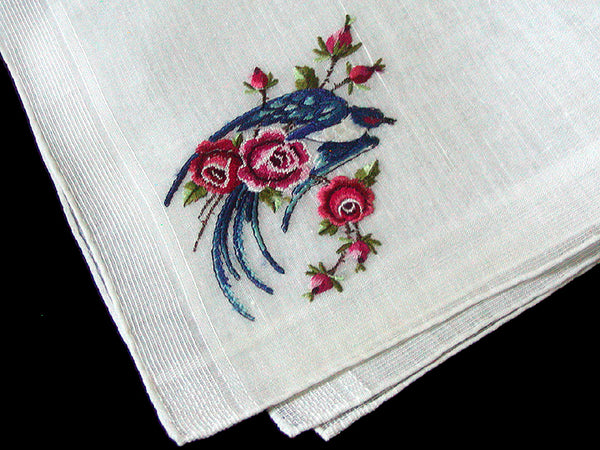
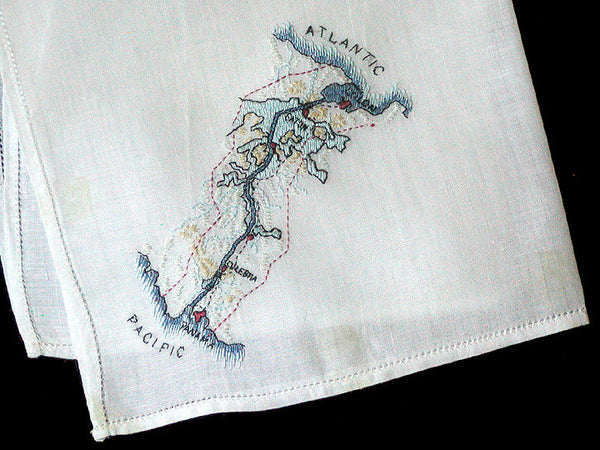
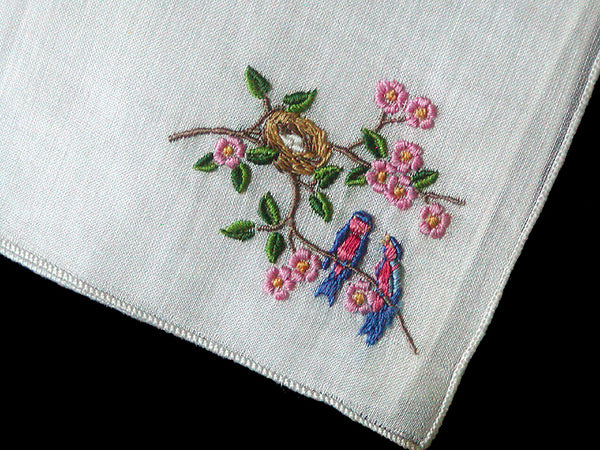
Under ideal conditions, hankies
should be treated like any other antique textiles
and linens. If you are not going to use them,
they should be wrapped in acid-free tissue paper.
Not all hankies are found in pristine condition.
If you find one at a flea market or an antique
mall, chances are it might have stains or soiling
at the fold lines. Often these handkerchiefs
will clean up just fine with little effort.
Of course, everybody
has their own favorite cleaning methods which
may differ from mine. I always start
with a hand soaking in mild laundry detergent
and warm water. If this does not remove the dirt,
you can try another soak in either Biz or Oxy-Clean
mixed with hot water. Sometimes just an hour or
two will do the trick; but it might require an
overnight soak. Always rinse in cold water, rinse
again, and again, and again -- until the water
is crystal clear. Squeeze the excess water from
the handkerchief(s), and either lay them flat
on a towel or hang to dry. A good rule of thumb
is to never use a washing machine and/or dryer,
as this can cause damage. However, if you do choose
this method, be sure to use the delicate or gentle
cycle.
Finally, before ironing,
you can use a little spray starch. Some
people will advise against starch of any kind
because storing starched linens can attract bugs
or other critters. So really, it's a matter of
personal preference to use starch or not. You
can always just spritz the handkerchief with water.
Either way is fine and up to you. Iron them on
the reverse side -- for two reasons. First, the
starch won't stick to the iron. Secondly, ironing
on the reverse side will not flatten any embroidery,
and will give you a crisp, clean finish.

|